

Tankless Water Heater Installation in Fontana, CA: Is It Worth It for Your Home?
Tankless water heaters have become one of the most common upgrade requests we receive from Fontana homeowners — and for good reason. The promise of unlimited hot water, lower energy bills, and a longer-lasting unit is genuinely appealing. But tankless systems aren’t the right fit for every home, and the decision deserves more than a sales pitch.
A O Dowd Plumbing installs and services tankless water heaters throughout Fontana and the Inland Empire. Here’s an honest breakdown of how tankless systems work, where they excel, where they fall short, and what installation actually involves in a Southern California home.
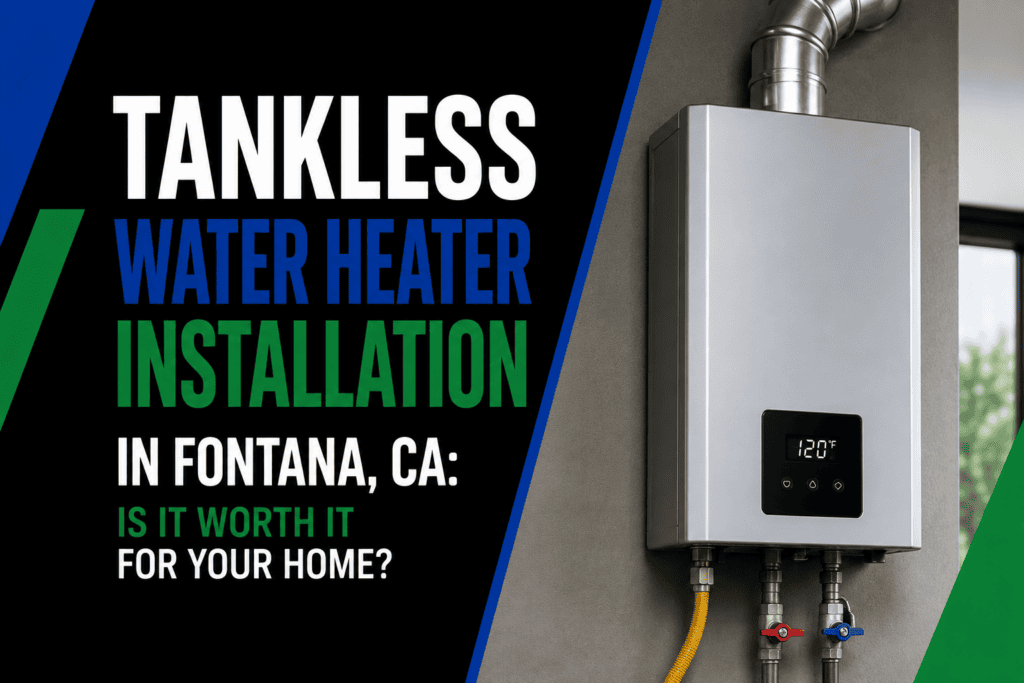
How a Tankless Water Heater Works
A traditional tank water heater stores 40–80 gallons of pre-heated water and keeps it hot around the clock — burning gas or electricity continuously to maintain that temperature whether you’re using hot water or not. A tankless unit has no storage tank. When you open a hot water tap, cold water flows through a heat exchanger inside the unit, which fires a powerful burner to heat the water on its way through. The burner shuts off when the tap closes.
This on-demand approach is the source of most of the tankless system’s advantages — and the source of its limitations.
The Real Benefits of Going Tankless
Energy Efficiency
Because a tankless unit only fires when hot water is actually being used, it eliminates standby heat loss — the energy consumed by a tank heater to keep stored water hot 24 hours a day. For most households, this translates to 15–25% lower water heating energy costs, which is meaningful given that water heating typically accounts for 15–20% of a home’s total energy use.
Unlimited Hot Water
A properly sized tankless unit never runs out of hot water. It heats water continuously as long as the tap is open. For larger households that have dealt with the third person to shower getting cold water, this is a genuine quality-of-life improvement.
Longer Service Life
Tank water heaters typically last 8–12 years in the Inland Empire’s hard water conditions. Tankless units, properly maintained, last 15–20 years. Over the life of the equipment, the higher upfront cost of a tankless unit is often offset by the longer replacement interval.
Space Savings
Tankless units are wall-mounted and roughly the size of a carry-on suitcase. In homes where the water heater closet or garage space is at a premium, this matters.
The Honest Limitations
Higher Upfront Cost
A quality whole-house tankless unit and its installation costs significantly more than a tank replacement — typically 2–3 times as much. The payback period from energy savings varies by household usage and gas rates, but it’s usually 5–10 years. If you’re planning to sell the home in the next few years, the financial math may not work in your favor.
Flow Rate Limitations
Every tankless unit has a maximum flow rate — measured in gallons per minute (GPM) — that it can heat simultaneously. Running two showers and a dishwasher at the same time may exceed the capacity of a single standard unit, resulting in a drop in temperature. Proper sizing is critical, and in larger homes, two units or a recirculation system may be needed.
Hard Water Is a Factor
This is specific to the Inland Empire: tankless heat exchangers are more vulnerable to scale damage than tank units. Fontana’s 15–25 GPG hard water will deposit scale inside the heat exchanger over time, reducing efficiency and eventually causing damage. Annual descaling — flushing the heat exchanger with a diluted vinegar or citric acid solution — is not optional maintenance for tankless units in this area; it’s essential. Pairing a tankless unit with a water softener significantly extends the heat exchanger’s service life.
What Tankless Installation Involves in a Fontana Home
Switching from a tank to tankless isn’t always a straightforward swap. Depending on your home’s existing setup, installation may require:
- Upgrading the gas supply line — tankless units have higher BTU demands than tank heaters and often require a larger diameter gas line
- Adding or relocating the flue/venting — direct-vent tankless units exhaust through a dedicated PVC or stainless vent to the exterior
- Installing a recirculation pump if you want instant hot water at fixtures far from the unit
- Pulling a permit — required in Fontana and throughout San Bernardino County for water heater installations
We assess your home’s gas line capacity, venting options, and hot water demand before recommending a specific unit and configuration. We install Navien, Rinnai, and Rheem tankless systems — all proven in Southern California’s hard water conditions.
Tankless Water Heater Service in Fontana and the Inland Empire
Whether you’re ready to make the switch or want an honest opinion on whether tankless makes sense for your household, A O Dowd Plumbing is here to help. We serve Fontana, Rancho Cucamonga, Rialto, Ontario, Colton, Chino, and surrounding areas.
Call (909) 684-1915 or request a tankless consultation online.